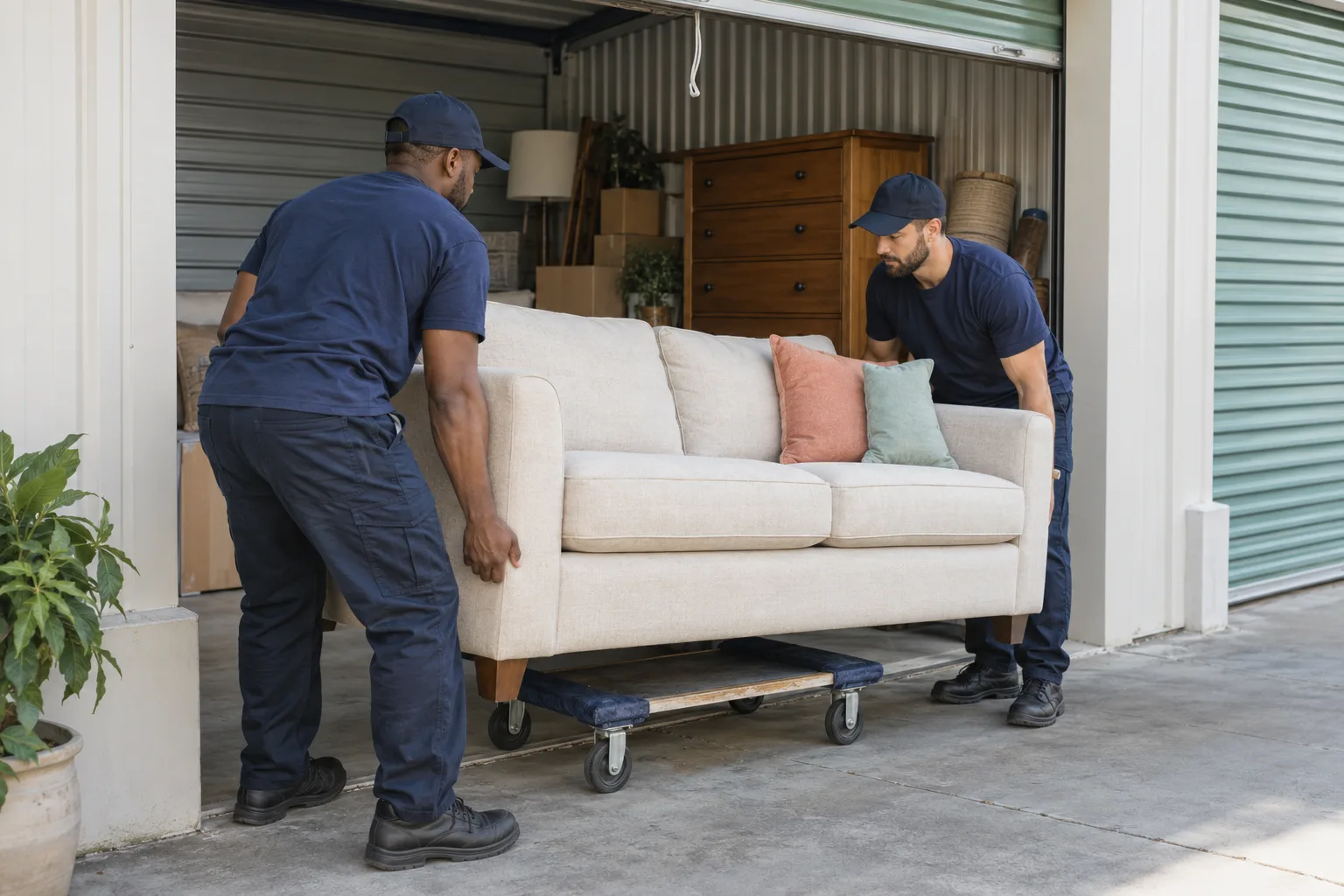
Measure the item at its widest points
Record width, depth and height. For sofas, include arms and fixed feet. For dressers, note whether drawers can be removed. For tables and bed frames, identify parts that were assembled after delivery.
Trace the route out
Measure the unit opening, hallway, elevator door and cab, loading door and any sharp turn. Note steps, slopes, curbs and the distance to the parking area.
Describe condition honestly
Loose joints, cracked glass, water damage and exposed fasteners change safe handling. Do not tape over damage and call it solved; show it in a photo and flag it.
Decide what can be disassembled
Keep hardware in a labeled bag and photograph the assembly before taking it apart. Do not attempt unfamiliar structural disassembly or force swollen, damaged or glass components.
Take this checklist to the unit
- Item width, depth and height
- Unit-door opening
- Narrowest hallway or turn
- Elevator door and cab size
- Stairs, curbs and loading distance
- Condition and removable parts
For service-specific boundaries and estimate details, review Storage Unit Furniture Removal or prepare a direct contact note.
Safety sources
The U.S. Environmental Protection Agency advises checking local programs for household hazardous waste rather than mixing paints, solvents, batteries or compressed-gas tanks into ordinary disposal. OSHA recommends clear aisles and suitable handling equipment for moving materials. See EPA household hazardous waste guidance and OSHA warehousing guidance.